Gold is the asset people reach for when they stop trusting everything else. It does not pay a dividend, it does not report earnings, and it does not promise to grow. Its entire pitch is that it holds value when paper money, banks, and governments wobble.
For most of the past two years, that pitch worked beautifully. Inflation refused to die, wars kept breaking out, and central banks bought bullion by the ton. Investors who wanted a hiding place piled in, and the metal rewarded them. Gold climbed through 2025 and kept climbing into 2026, hitting a record high near $5,600 an ounce at the end of January. At that price it looked unstoppable, and Wall Street treated it that way, with some banks setting targets as high as $6,000.
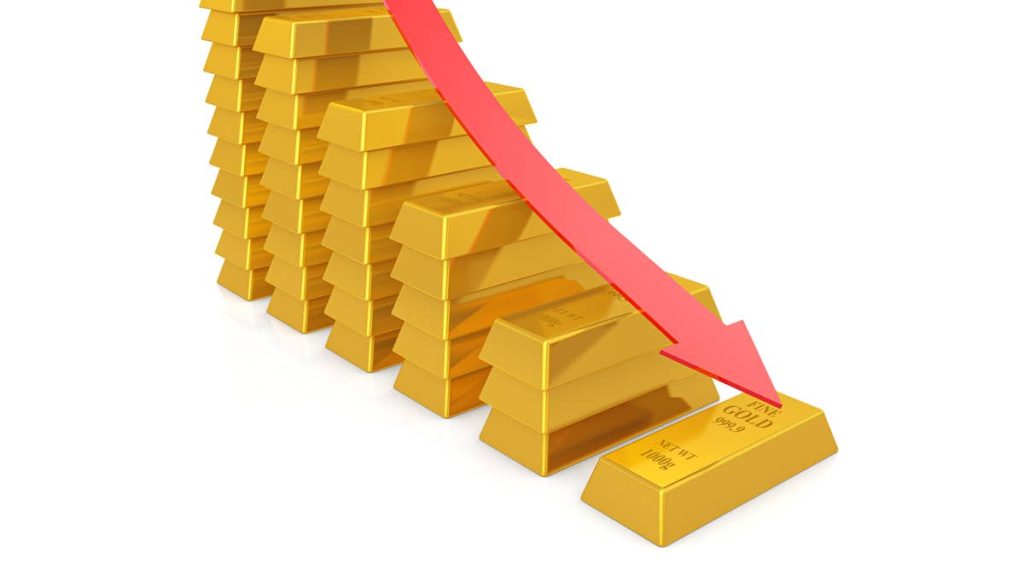
Then the Federal Reserve changed the math, and the most reliable trade of the year quietly fell apart. Gold is now heading for its worst quarter since 2013, the year of the so-called taper tantrum. The metal that was supposed to protect portfolios just handed its owners one of the steepest three-month losses in over a decade.
Why gold and interest rates move in opposite directions
Gold and interest rates are natural enemies. Gold pays you nothing to own it, so its appeal rests entirely on what you give up by holding it instead of something that earns a yield. When rates sit low, that trade-off costs almost nothing, and gold tends to shine. When rates climb, cash and bonds start paying real money again, and the case for a metal that just sits in a vault gets much harder to make.
More Fed News:
- Goldman hints at Fed’s next interest-rate bet under Warsh
- Fed’s Warsh leaves markets guessing on rate hikes
- Mortgage rate outlook shifts after Fed decision
This is not a new pattern. The same dynamic crushed gold in 2013. Back then, the Fed signaled it would slow the bond-buying program it had run since the financial crisis, real yields jumped, and gold tumbled more than 25% over the year. Traders named it the taper tantrum, and it still stands as the textbook example of how fast bullion can crack when the central bank turns hawkish.
When I lined this year’s slide up against that 2013 episode, the rhyme was hard to ignore. Same trigger, a Fed yanking away support faster than markets had penciled in. Same casualty, an asset whose only job is to look attractive when everything else looks frightening. This time, gold is falling from a far greater height.
Related: Gold’s rebound has a problem. Here’s what happens next
What a hawkish Fed means for gold prices now
The pressure traces back to one room. At its June meeting, the Fed under new Chair Kevin Warsh held its benchmark rate steady in a range of 3.50% to 3.75%, but the accompanying projections told a far more aggressive story. Nine of 18 policymakers penciled in at least one more rate increase this year, lifting the implied year-end rate to roughly 3.8% from 3.4% back in March, based on the Fed’s own June projections.
The dollar took the hint and rallied for a second straight month, and gold, which is priced in dollars, grew more expensive for buyers around the world. Spot prices broke below $4,000 on June 24 for the first time since November, then sank to about $3,942 on the final morning of the quarter before clawing back. By the closing bell, bullion was down more than 11% for the month, its steepest monthly fall since October 2008.
The behavior of traders tells you how the mood has flipped. Buyers who spent two years treating every dip as a gift are now doing the opposite. Investors are choosing to “sell into strength rather than buy into weakness,” said Saxo Bank analyst Ole Hansen, per CNBC. It is a sharp reversal from the dip-buying that powered gold’s long climb.
Bond yields are the quiet force underneath all of it. The 10-year Treasury yield sits near 4.39%, and the futures market puts the odds of a September rate hike at about 64%, according to FXEmpire. As long as those numbers hold, the dollar stays firm and gold keeps paying the price. The dollar and yields are “the only thing that matters for gold right now,” wrote FXEmpire analyst James Hyerczyk.
Even gold’s biggest believers have started trimming their expectations. The forecast cuts piling up over the past two weeks show how quickly the story shifted:
- Goldman Sachs cut its 2026 gold target to $4,900 an ounce from $5,400, according to IBTimes.
- OCBC lowered its end-2026 forecast to $4,360 from $5,100, according to Yahoo Finance.
- J.P. Morgan held a $6,000 year-end call but trimmed its 2026 average to $5,243, according to Capital.com.
The wild card is Warsh himself. He scrapped the forward guidance the Fed had leaned on for years, which leaves traders parsing his tone instead of his words. He speaks at the European Central Bank’s annual forum on Wednesday, his first big international appearance as chair, and the market is listening for one thing. If he keeps naming inflation as the top priority, the dollar firms again and gold’s bounce stalls. For now, “all eyes are now on the inflation trajectory,” Macquarie strategists wrote, per InteractiveCrypto.
What gold’s slide means for your money
Strip out the jargon and the number that matters is 28%. That is how far gold has fallen from its late-January record near $5,600, which means a $50,000 position bought at the top is worth closer to $36,000 today. If you hold the SPDR Gold Shares (GLD), the largest gold exchange-traded fund (ETF), your statement has felt every percent of that.
What struck me reading through the forecast cuts is that even the bulls blinked, yet none of them called gold broken. They lowered targets, they did not abandon the metal. There is a real difference between an asset that has failed and an asset that got ahead of itself, and gold looks like the second kind of problem.
There is also a floor under the selling. Central banks bought a net 244 tonnes of gold in the first quarter, a pace that has barely flinched as prices dropped, according to the World Gold Council. Governments buy bullion for reasons that have nothing to do with a quarterly chart, and that steady demand is what keeps a correction from becoming a collapse.
The line to watch now is $4,000 an ounce, the level analysts have flagged as the market’s next real test. A clean break below it could trigger another wave of selling from ETF holders heading for the exits. A hold could pull in bargain hunters who see the 28% drop as an overcorrection rather than a verdict.
For anyone with gold in the mix, the takeaway is less about panic than about expectations. The metal did exactly what it was built to do for two years, and it is now doing what every crowded trade eventually does when the Fed changes course. Warsh speaks July 1, and the June jobs report lands July 2. Those two events will tell you whether gold’s worst quarter in 13 years was the bottom or just the warning.