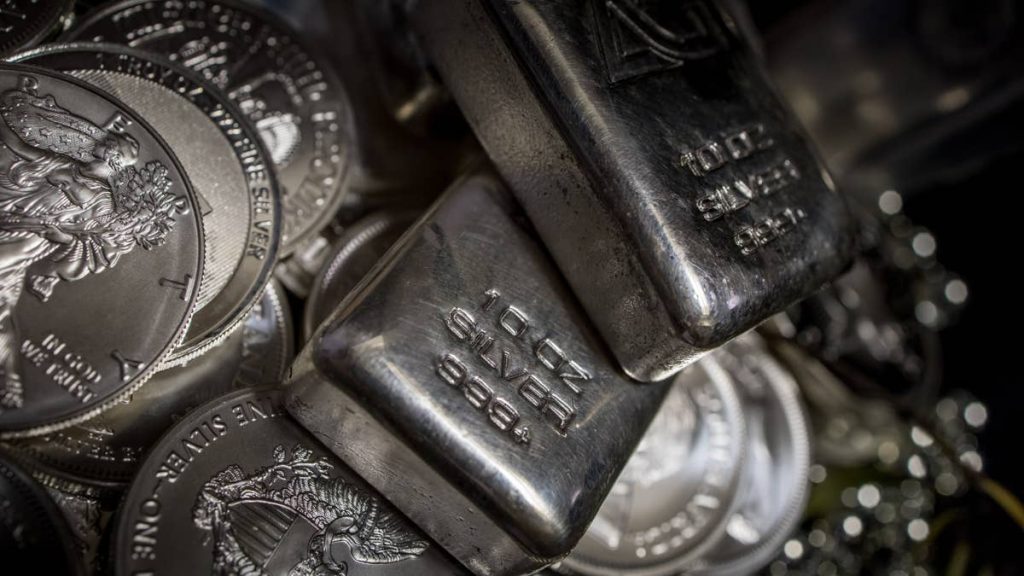
Silver has been clearly a wild trade so far this year.
Spot silver traded near $64.25 per ounce on August 14, according to Reuters, leaving the metal around 10% behind where it closed out in 2025.
Also, it’s trading at nearly half its January peak, especially after silver skyrocketed 161% last year.
The pressure has come from multiple sides. The Iran conflict and the resulting uncertainty around the Strait of Hormuz backed safe-haven demand but also raised inflation and growth concerns, negatively impacting industrial consumption.
On top of that, shifting expectations for Federal Reserve policy kept precious metals swinging sharply.
On the flip side, Gold has held up better, trading near $4,331 per ounce, according to Investing, and roughly flat for the year, buoyed by central bank buying and renewed demand for safety.
Nevertheless, for battered silver investors, there may be reason to look beyond the choppiness. In its latest note shared with me, Citi laid out its riveting bull case for what could come next.
Why Citi still sees major upside for silver
Citi analysts still see substantial upside ahead for silver, even after a topsy-turvy run for the metal in 2026.
More Gold & Silver:
- Robert Kiyosaki has a bold call on gold and silver
- Peter Schiff sees something big in gold and silver
- BofA sees lost year taking shape for gold
It’s doubling down on its price target of $90 an ounce over the next six to 12 months, implying 40% upside from current prices near $64.
Also, Citi maintained its short-term $75 target for the next three months.
According to the bank, silver’s relatively soft industrial demand will be offset by stronger investment demand.
“We expect silver to continue to track gold in direction with high beta, making it an ideal upside play… for a quick Strait of Hormuz resolution,” Citi said.
As we look ahead, Citi points to an eventual de-escalation of the Strait of Hormuz crisis, somewhere between September and December, alongside a less hawkish Federal Reserve.
Consequently, that could weaken two major headwinds silver is facing: higher yields and a stronger U.S. dollar.
As mentioned above, industrial demand is more uncertain.
Solar companies are looking for ways to use less silver, and newer solar-panel technology might require less of the metal, substituting copper, according to SolarPowerWorld.
However, Citi still expects strong demand from AI, 5G, and electric vehicles, keeping the global silver market in deficit through 2027.
Citi’s $90 silver call is bullish, but far below its 2026 peak
Importantly, $90 isn’t a brand-new pivot from Citi, and it has been a lot more bullish on silver before.
In January, Kitco reported Citi forecast silver would rise to $100 by March and $110 in the second half of 2026. Later that month, on the back of silver’s breathtaking rally, Citi bumped its zero-to-three-month target to $150 according to Trading View.
However, after prices corrected, Citi reset expectations.
In June, it raised its short-term forecast from $60 to $70, before arriving at its current $75 near-term and $90 six-to-12-month outlook.
Recent inflation numbers offer some support for that view.
July CPI jumped to 3.4% year over year, just 0.1 percentage point higher than June, lowering expectations for another Fed hike.
“The CPI data has been encouraging. It was higher than last month, but it was in line with estimates, along with a weaker dollar and technicals, which have all helped gold piggyback on it.”
Marex analyst Edward Meir said.
Why AI, 5G and EVs could keep silver demand elevated
All three technologies Citi discussed require increasingly complex hardware, and silver’s tremendous conductivity makes it tough to replace in multiple high-performance applications.
In AI, silver is used in applications such as electrical contacts, switches, printed circuit boards, and other equipment found throughout servers.
As companies build more power-hungry AI data centers, the demand for additional servers and networking gear is inevitable.
Moreover, the immense scale of that buildout is striking.
Oxford Economics estimates global IT power capacity rising to roughly 50 gigawatts in 2025, up from 0.93 GW in 2000, a roughly 5,252% increase.
On the flipside, EVs offer a more measurable demand story.
According to SD Bullion, battery EVs consume around 25 to 50 grams of silver per vehicle, or roughly 67% to 79% more than internal-combustion vehicles.
As we look ahead, global electric-car sales are rising at an exponential pace, with sales set to reach 21 million vehicles in 2025, meaning one in every four cars sold globally will be electric, according to the IEA.
Then there is 5G.
Silver is a major component in electronic components, chips, and electrical contacts that enable faster wireless networks and connected devices. The Silver Institute’s 5G study forecast that silver demand from the technology sector would rise from 7.5 million ounces at the beginning of the decade to 16 million ounces by 2025 and as much as 23 million ounces by 2030.
What silver investors need to look for ahead
At around $64, Citi’s price target offers tremendous upside, but that depends a lot on macro conditions improving.
Perhaps the most important variable is the Federal Reserve.
A less hawkish Fed, falling yields, and a weaker dollar will offer an excellent setup for silver to start racking up the gains again.
Of late, though, the Fed has been a major source of uncertainty due to vague communication from Fed Chair Warsh, as Bank of America noted in a report I covered recently.
Moreover, eventual de-escalation to support gold and silver by lowering inflationary pressures and improving expectations for monetary policy will also benefit substantially. However, a more elongated crisis that keeps oil prices higher for longer could keep interest rates higher.
On top of that, it is important for investors to monitor silver as more of a high-beta version of gold. If there’s a sustained increase in gold prices, along with silver ETF inflows, that would offer stronger evidence that investment demand is taking control of the market.
Related: Jim Cramer says Nvidia now signals something much bigger