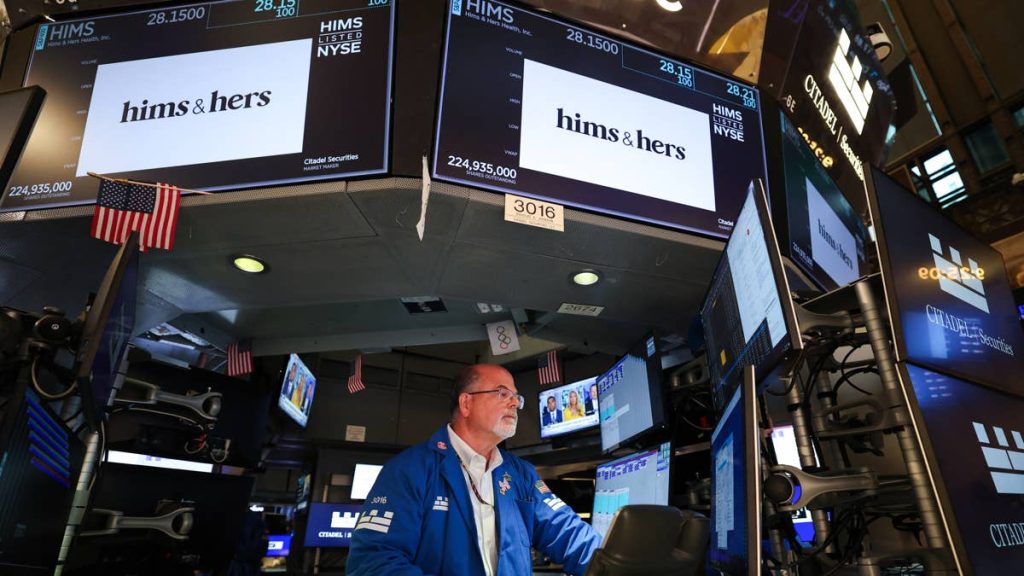
ProShares S&P 500 Dividend Aristocrats ETF (NOBL), barely moved on September 1 while the broader market sold off hard. Wall Street’s first trading day of September turned into a rout, and the fund’s calm stood out against it.
The selling followed a fresh escalation between the United States and Iran that pushed oil prices sharply higher and sent government bond yields climbing, according to a market recap from Alain Guillot.
Every major index closed lower, but NOBL fell only a fraction of what stocks broadly lost.
Related: Schwab SCHD draws $679M as dividend ETF climbs 2.39%
NOBL barely reacted while stocks sold off hard
The S&P 500 dropped 0.7% on September 1 to close at 7,631.47, and the Dow Jones Industrial Average lost 419 points, or about 0.8%, to finish at 52,766.88, according to CNBC’s recap.
The Nasdaq Composite fell roughly 1% to close at 26,099.77. Technology stocks led the decline, with cybersecurity firms among the hardest hit.
NOBL closed the session at $57.64, down about 0.4%, according to ProShares’ own fund data. That decline was roughly half the size of the S&P 500’s drop and less than half the size of the Nasdaq’s, a gap that shows dividend-focused strategies picking up support just as tech sentiment turned sour.
The fund’s structure limits its tech exposure
NOBL’s resilience traces back to how it is built. The fund equally weights all 69 of its holdings rather than letting a handful of giant companies determine its returns, and no single sector can exceed 30% of the index, according to ProShares.
That structure is why the fund was not dragged down by the same mega-cap technology weakness that hit the Nasdaq hardest.
That construction pushes technology down to roughly 3% of the portfolio, while consumer staples and industrials each make up about a fifth of the fund, according to a July analysis from 24/7 Wall Street.
None of the Magnificent Seven companies qualify for the index, since two of them (Amazon and Tesla) do not pay a dividend at all.
More Dividend Stocks:
- Does IBM pay dividends? History, yield & payout ratio explained
- Does Walmart pay dividends? Its yield and payouts explained
- Does Sandisk pay dividends? Will it split its stock?
Dividend growth matters more than headline yield
NOBL’s 30-day SEC yield sits at 2.14%, modest next to some high-yield ETFs, and the fund charges a 0.35% expense ratio while holding $11.76 billion in net assets, according to ProShares.
What the underlying index screens for is not yield, but a 25-year streak of dividend increases, a bar that filters out companies with shaky cash flow.
The S&P 500 Dividend Aristocrats Index returned 5.89% over the three months ended July 31 and 11.05% year to date, trailing the broader S&P 500’s stronger tech-driven gains during that stretch, according to ProShares.
That lag is the tradeoff investors accept for smoother days like September 1.
A few additional data points frame the broader shift toward dividend strategies:
- Dividend-focused ETFs pulled in $24.1 billion in the first quarter alone, a pace that could set a record for the full year, according to The Motley Fool.
- A 10-year Treasury yield near 4.76% makes bonds more competitive with expensive growth stocks, pressuring the same technology names that have carried the market for years, according to Yahoo Finance.
- NOBL trades close to its 52-week high near $58, even after years of lagging the S&P 500’s tech-heavy gains, according to 24/7 Wall Street.
A quiet rotation could reshape market leadership
One calm trading day does not prove dividend aristocrats have taken over market leadership.
But the pattern fits a broader shift already visible in fund flows, where investors increasingly want proof of durable cash generation rather than a promise of future AI payoffs.
If oil prices and rate worries keep pressuring growth stocks through September, historically the weakest month for stocks, funds like NOBL may keep drawing steady interest.
Not because they are exciting, but because they are boring in exactly the way nervous investors want right now.